ASTM standards are the technical specifications that govern how geotechnical and construction materials testing (CMT) work is performed in the United States. The most-referenced standards for CMT labs are ASTM C39 (concrete compressive strength), C78 (flexural strength), C136 (sieve analysis), D1557 (modified Proctor), D2216 (moisture content), D4318 (Atterberg limits), and D420 (site characterization). Each defines required equipment, procedure, calculations, and reporting — and each is referenced directly in DOT specifications and project plans.
The challenge is not understanding that ASTM matters. The challenge is executing ASTM-compliant workflows consistently across field crews, lab technicians, project managers, and final reporting. Paper forms, spreadsheets, and disconnected systems introduce risk, slow turnaround times, and create audit exposure.
This guide serves as the central resource for ASTM standards in geotechnical and construction materials testing. It explains what ASTM standards are, why they matter, highlights the most commonly used standards, and shows how modern digital workflows help firms operationalize compliance from field to final report.

What Are ASTM Standards?
ASTM International (formerly the American Society for Testing and Materials) develops and publishes voluntary consensus standards that define how engineering tests are performed, calculated, and reported.
For geotechnical and construction materials testing firms, ASTM standards ensure that:
- Tests are performed consistently regardless of technician or location
- Results are comparable across projects and laboratories
- Data is defensible during audits, disputes, and QA/QC reviews
- Clients, owners, and DOTs can trust reported results
In practice, ASTM standards are the common language of quality and compliance across the construction industry.
Why ASTM Standards Matter for Geotechnical & CMT Firms
ASTM compliance impacts nearly every part of your operation.
Regulatory and Contractual Requirements
Most DOTs, municipalities, and owners explicitly require ASTM or AASHTO-compliant test results. Non-compliance can lead to rejected data, retesting costs, or payment delays.
Risk and Liability Reduction
Incomplete documentation, missing calculations, or inconsistent procedures increase legal and financial risk. ASTM standards provide a defensible framework when results are challenged.
Operational Efficiency
Standardized testing workflows reduce rework, eliminate ambiguity, and speed up reporting. Firms that operationalize ASTM standards scale more efficiently.
Competitive Advantage
Firms that demonstrate consistent ASTM compliance win more bids, maintain accreditations more easily, and build long-term client trust.

Key ASTM Standards for Geotechnical & Construction Materials Testing
Below are the most common ASTM standards used by geotechnical and CMT firms. Where available, each standard should link to a dedicated explainer or workflow guide.
Geotechnical and Soil Testing ASTM Standards
-
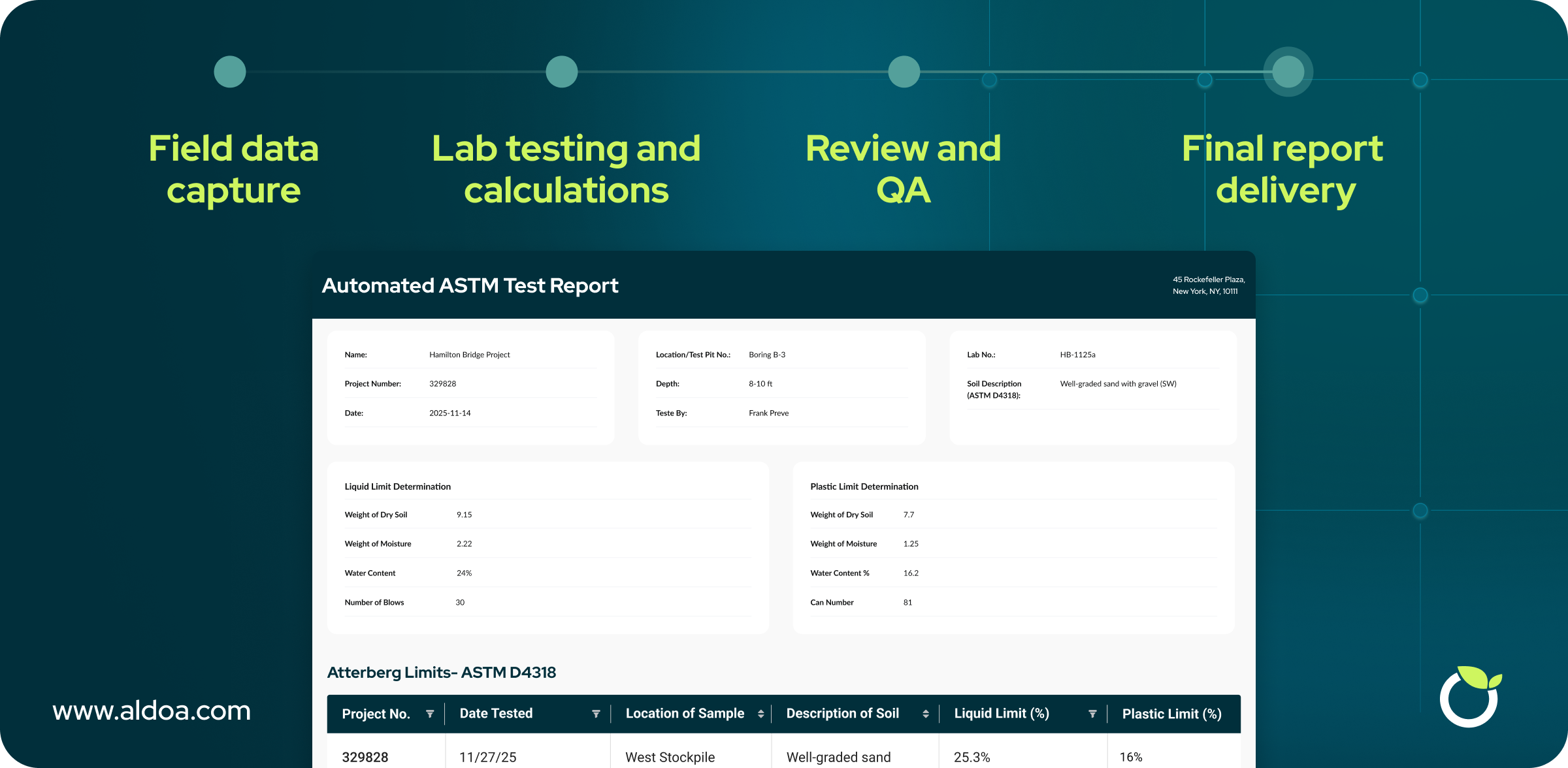
ASTM D4318 – Atterberg Limits (LL, PL, PI)
-
ASTM D1557 – Modified Proctor (moisture-density relationships)
-
ASTM D2216 – Moisture content of soils
-
ASTM D420 – Site characterization for geotechnical projects
-
ASTM D6938 – In-place density and moisture content (nuclear gauge)
-
ASTM D3740 – Minimum requirements for testing agencies
These standards govern how soil properties are measured, documented, and validated throughout the geotechnical lifecycle.
Aggregate Testing ASTM Standards
-
ASTM C136 – Sieve analysis of fine and coarse aggregates
-
ASTM C117 – Materials finer than No. 200 sieve
-
ASTM D6928 – Micro-Deval abrasion of aggregates
Aggregate testing standards ensure consistency in gradation, durability, and performance for concrete and pavement applications.
.png?width=2400&height=1176&name=ASTM%20C136%20%E2%80%93%20Sieve%20Analysis%20(1).png)
Concrete Testing ASTM Standards
-
ASTM C31/C31M – Making and curing concrete test specimens
-
ASTM C39/C39M – Compressive strength of concrete cylinders
-
ASTM C78/C78M – Flexural strength of concrete
-
ASTM C143/C143M – Slump test
-
ASTM C138/C138M – Density, yield, and air content of concrete
-
ASTM C1077 – Laboratory requirements for concrete and aggregates
Concrete standards define how specimens are prepared, tested, and reported to ensure safety, performance, and compliance.
ASTM vs. AASHTO: What’s the Difference?
ASTM and AASHTO standards often overlap, but they serve different governing bodies.
- ASTM standards are used broadly across private and public construction projects
- AASHTO standards are typically required for transportation and DOT projects
Many tests have ASTM and AASHTO equivalents with similar procedures but different acceptance criteria or documentation requirements. In reality, most geotechnical and CMT firms must comply with both, depending on the project owner.
Common Challenges with ASTM and AASHTO Compliance
Despite best intentions, many firms struggle with execution.
Manual Data Collection
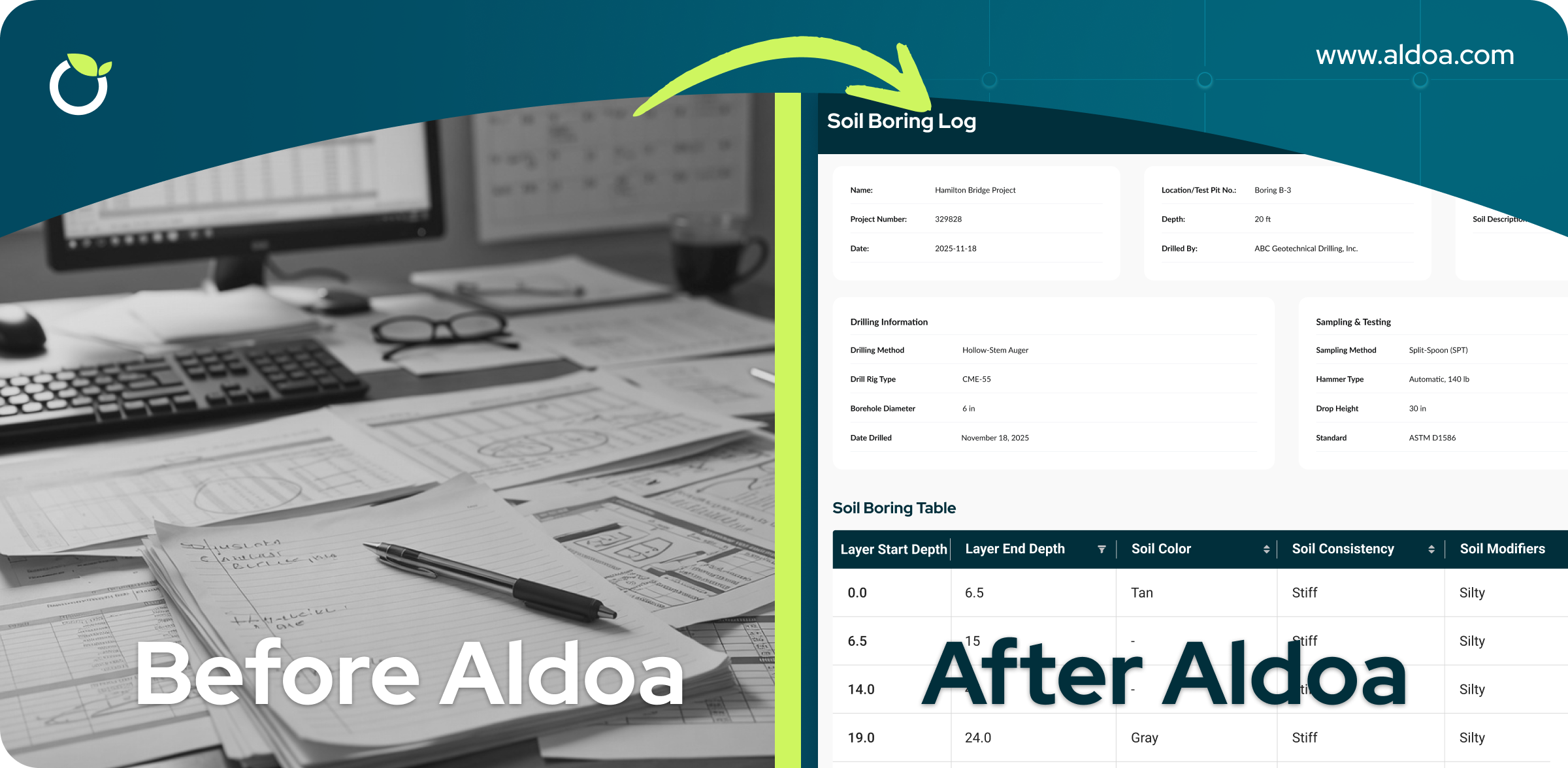
Paper forms lead to missing fields, illegible handwriting, and delayed data entry.
Disconnected Field and Lab Systems
When field data, lab results, and reporting tools are not connected, errors multiply and traceability disappears.
Audit and Accreditation Risk
ISO 17025, AASHTO re:source, and DOT audits require clear documentation, version control, and traceability.
Time-Consuming Reporting
Engineers and PMs waste hours reformatting spreadsheets into ASTM-compliant reports.
.png?width=2400&height=1176&name=Spreadsheets%20Soil%20Boring%20Logs%20(1).png)
How Aldoa Simplifies ASTM Compliance
Aldoa is a modern field and lab data management platform built specifically for geotechnical and CMT teams.
ASTM-Aligned Digital Field Forms
Technicians capture density, slump, moisture, and sampling data digitally using standardized ASTM-aligned templates.
Lab Workflow Automation
Track curing times, specimen storage, calculations, and test results in one system aligned to ASTM procedures.
Standardized Final Reports
Generate ASTM and AASHTO-compliant reports without manual formatting or spreadsheet manipulation.
Full Traceability and Audit Readiness
Every test is tied to the technician, equipment, timestamps, and calculations needed for audits and QA/QC reviews.
Conclusion: ASTM Compliance Without the Chaos
ASTM standards are the backbone of geotechnical engineering and construction materials testing. Compliance ensures safety, quality, and trust across every project.
The firms that succeed are not just knowledgeable about ASTM standards. They operationalize them.
With Aldoa, geotechnical and CMT teams can digitize ASTM workflows, reduce errors, accelerate turnaround times, and stay audit-ready without added complexity.
Learn more and schedule a demo at www.aldoa.com
.svg "Aldoa Assets (3)")