Concrete quality control is the backbone of safe, durable, and compliant construction. From field sampling to cylinder breaks and final reporting, every step of the concrete testing process must be executed accurately, documented thoroughly, and reviewed consistently.
Yet many concrete QA/QC teams still rely on paper forms, spreadsheets, and disconnected systems that introduce errors, slow turnaround times, and increase compliance risk.
Modern concrete quality control software solves these challenges by digitizing workflows, enforcing QA/QC standards, and connecting test data across field, lab, and reporting systems.
This guide explains what concrete quality control software is, why it matters, key QA/QC capabilities to look for, and how modern platforms like Aldoa integrate with testing machines and lab systems to deliver reliable, audit-ready results.
What Is Concrete Quality Control Software?
Example of ASTM C78 flexural strength test results captured and managed inside concrete quality control software.
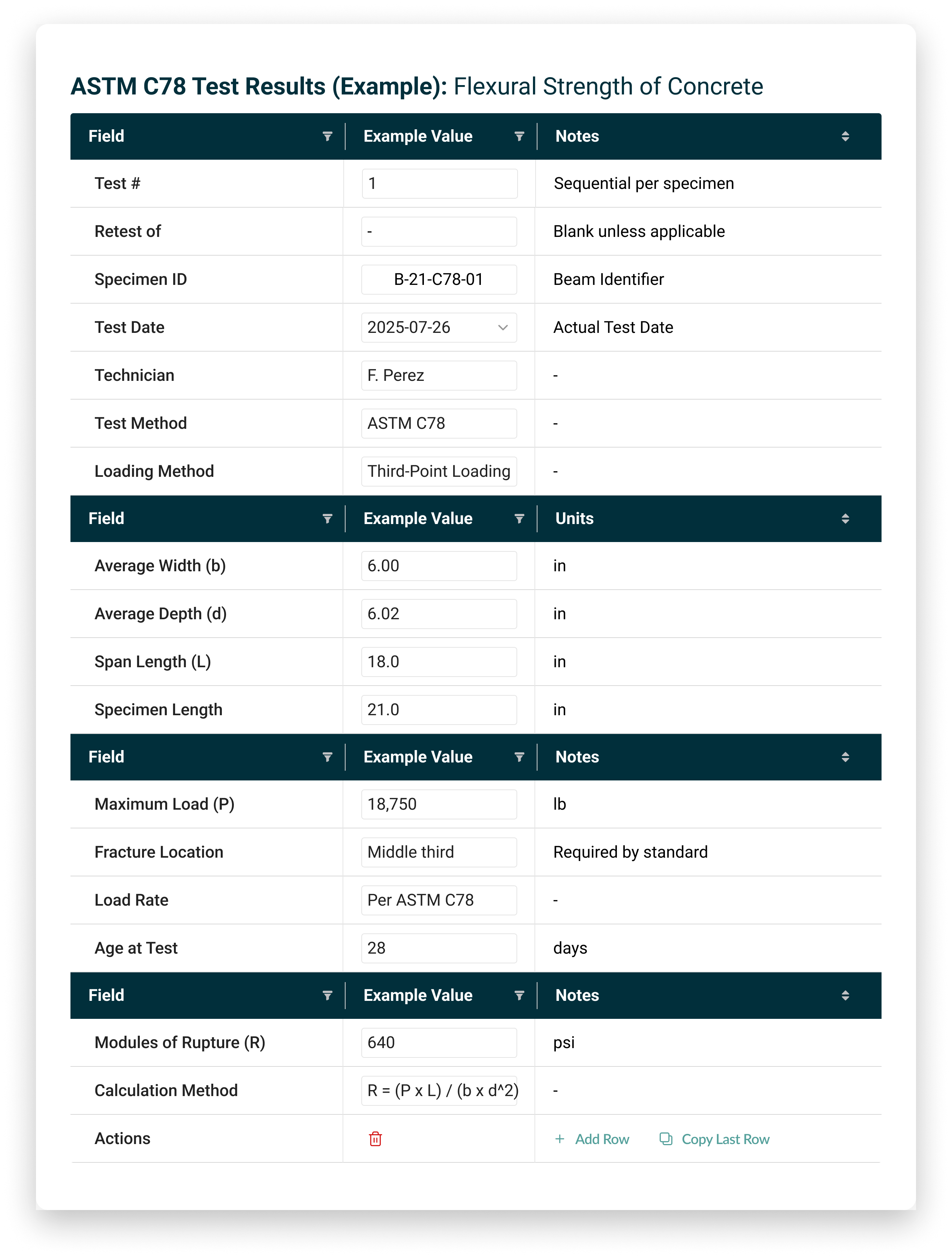
Concrete quality control software is a digital system used by construction materials testing (CMT) labs, concrete producers, and QA/QC teams to manage concrete testing data, workflows, and compliance documentation.
At its core, concrete QC software helps teams:
- Capture accurate field sampling data
- Track concrete cylinders and break schedules
- Record and validate test results
- Enforce QA/QC review and approval processes
- Generate standardized, compliant reports
- Maintain a complete audit trail for every test
Unlike basic spreadsheets or standalone machine software, modern concrete QA/QC platforms connect people, processes, and data across the entire testing lifecycle.
Why Concrete QA/QC Requires More Than Test Machines
Concrete testing machines generate critical strength data, but QA/QC does not start or end at the machine.
A complete concrete quality control process includes:
- Field sampling accuracy (slump, air, temperature, location)
- Proper cylinder identification and chain of custody
- Controlled curing and break scheduling
- Verified calculations and test results
- Review, approval, and reporting
- Long-term data retention for audits and disputes
Without software that enforces these steps, even accurate machine data can become incomplete, unverifiable, or non-compliant.
That is why leading QA/QC teams pair machine-level data integrity tools with workflow-focused QA/QC software.
Common Challenges in Traditional Concrete Quality Control
Despite the importance of QA/QC, many teams struggle with execution.
Manual Data Collection: Paper field tickets and handwritten cylinder tags lead to missing information, transcription errors, and delays.
Disconnected Systems: Field data, lab results, and reports live in separate tools, making traceability difficult and reviews time-consuming.
Inconsistent QA/QC Processes: Without standardized digital workflows, QA/QC checks depend on individual habits rather than enforced rules.
Audit and Compliance Risk: DOTs, owners, and accreditation bodies require clear documentation, approvals, and historical records that are difficult to assemble manually.
Key Capabilities of Modern Concrete Quality Control Software
Not all concrete QC software is the same. The most effective platforms combine data integrity with workflow control.
1. Digital Field Data Collection
Concrete QA/QC starts in the field. Modern software replaces paper forms with mobile-friendly digital workflows that ensure required data is captured consistently.
- Slump, air content, temperature, and sampling details
- Photos, GPS location, and timestamps
- Technician identification and signatures
This reduces errors at the source and ensures lab teams receive complete, reliable information.
2. Concrete Cylinder Tracking and Chain of Custody
Every cylinder must be traceable from pour to break.
Concrete quality control software should provide:
- Unique cylinder IDs
- Automated break scheduling
- Clear chain of custody from field to lab
- Visibility into curing status and test readiness
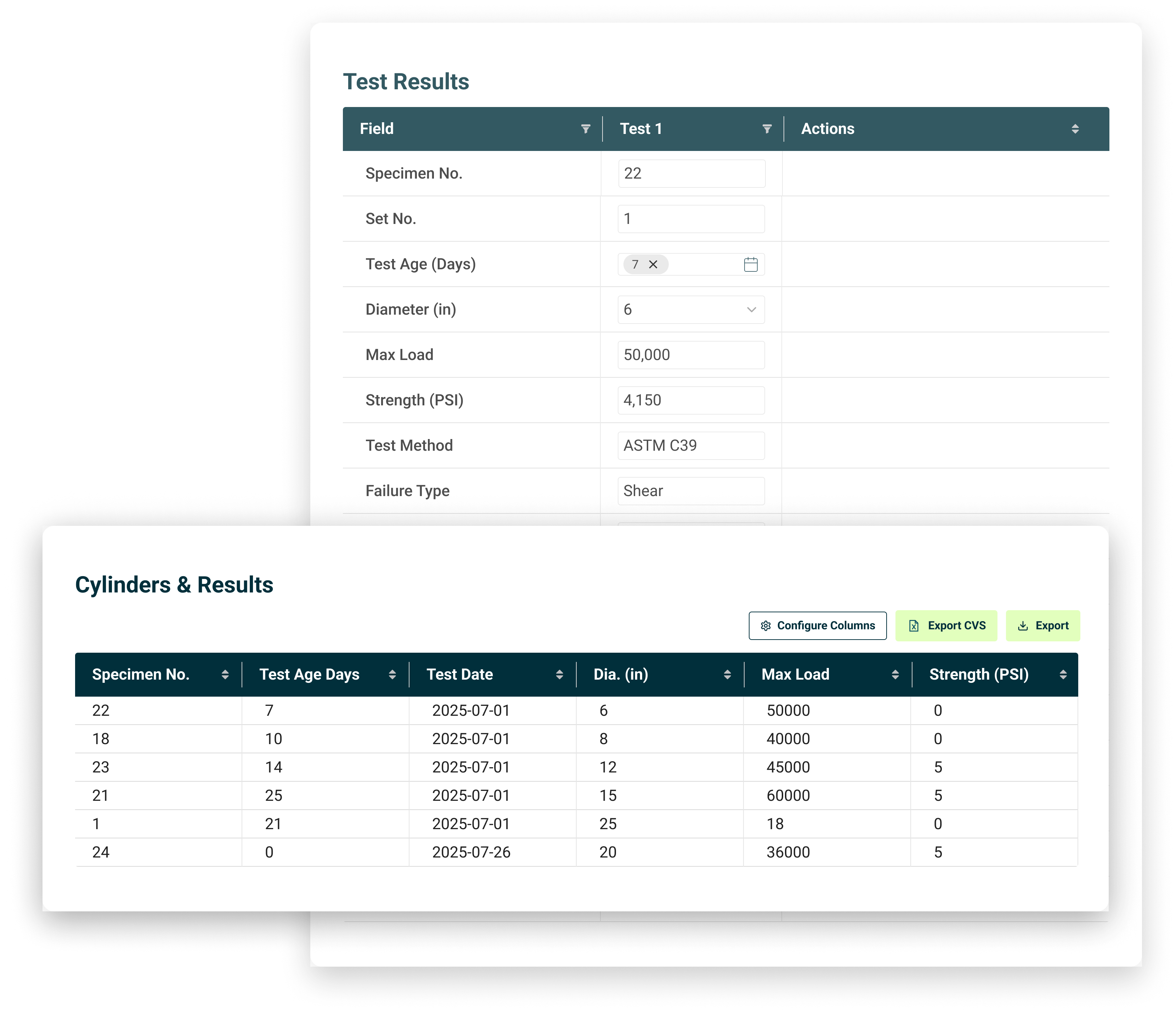
This prevents missed breaks, misplaced samples, and undocumented handling.
3. QA/QC Review and Approval Workflows
True QA/QC happens before reports go out the door.
Modern platforms embed QA/QC directly into workflows by enabling:
This ensures results are defensible and consistently reviewed.
4. Integration with Concrete Testing Machines
Testing machines produce authoritative strength data, but that data must be connected to the broader QA/QC process.
Leading concrete quality control platforms integrate with machine-level systems such as ForneyVault to automatically capture break data and link it to:
- The original field sample
- The specific cylinder and curing history
- The technician, machine, and test method
- The final report
This eliminates manual re-entry while preserving data integrity.
5. Automated, Compliant Reporting
Concrete QC software should generate client-ready reports directly from approved data.
Key reporting capabilities include:
- ASTM, ACI, and DOT-compliant formats
- Custom templates for owners and agencies
- One-click report generation
- Secure distribution and long-term storage
Reports should be reproducible, traceable, and audit-ready at any time.
How Aldoa Supports Concrete QA/QC from Field to Final Report
Aldoa is a modern concrete quality control and QA/QC platform designed for CMT labs and geotechnical firms that need more than isolated machine data.
Automated ASTM C39 concrete compressive strength results captured from lab equipment and reported through Aldoa’s concrete QA/QC software.
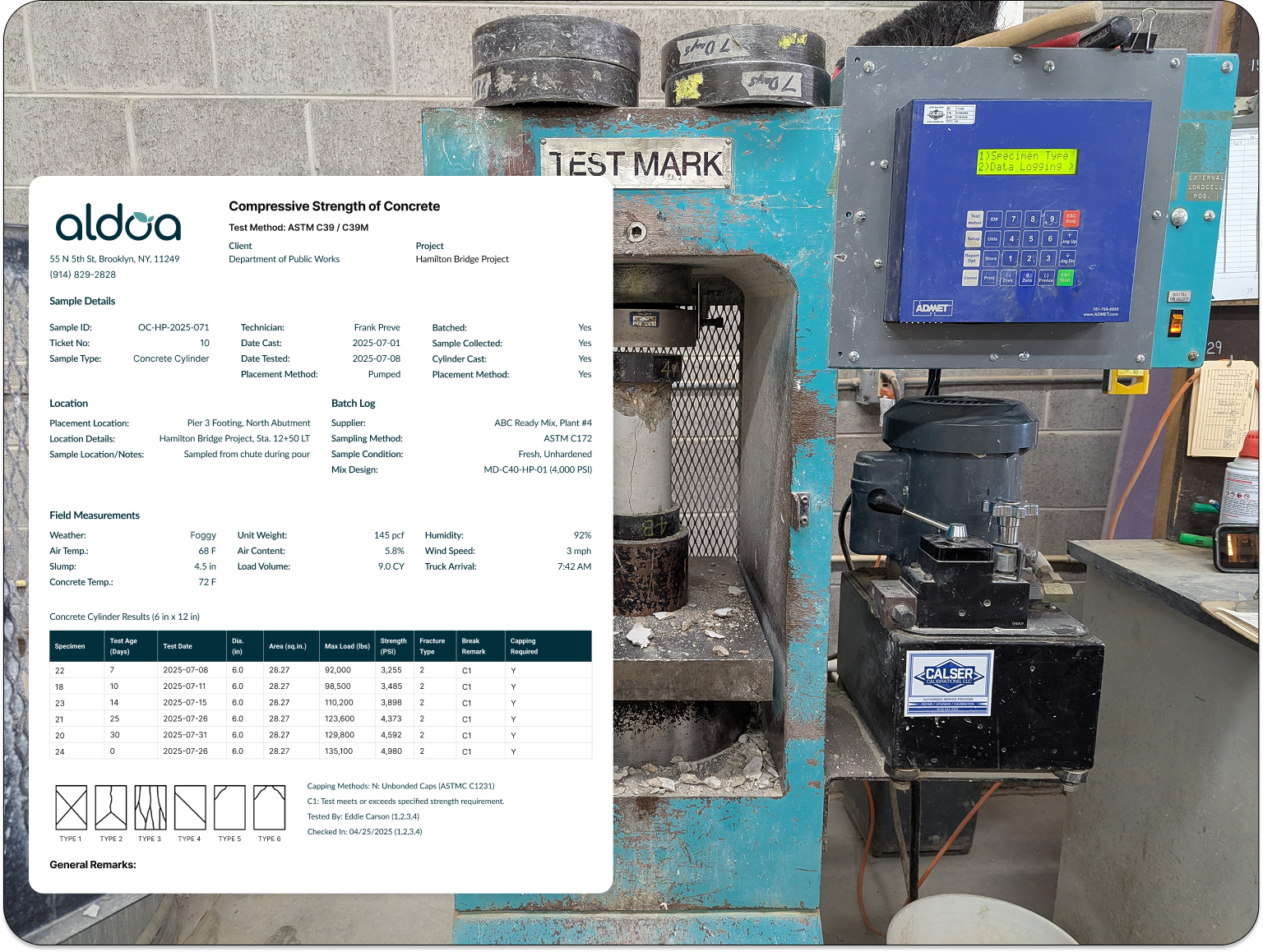
Aldoa connects:
- Field data collection for concrete sampling
- Cylinder tracking and break management
- QA/QC review and approvals
- Automated reporting
- Machine integrations, including ForneyVault
By integrating with concrete testing machines while managing the full QA/QC workflow, Aldoa ensures that every test result is complete, traceable, and defensible.
QA/QC is enforced inside the process, not added as a manual step at the end.
Concrete Quality Control Software for Compliance and Confidence
Concrete QA/QC is not just about passing tests. It is about delivering trust.
Modern concrete quality control software helps teams:
- Reduce manual errors
- Accelerate reporting timelines
- Maintain consistent QA/QC standards
- Prepare for audits with confidence
- Scale operations without increasing risk
By combining machine-level data integrity with workflow-driven QA/QC, teams can meet today’s compliance requirements while preparing for tomorrow’s projects.
Choosing the Right Concrete Quality Control Software
When evaluating concrete QC solutions, look beyond individual features and focus on how well the system supports the entire QA/QC lifecycle.
The right platform should:
- Enforce standardized workflows
- Integrate with testing machines and lab systems
- Provide end-to-end traceability
- Support audits without scrambling
- Grow with your field and lab teams
Aldoa delivers all of this in one connected platform built specifically for concrete testing and QA/QC teams.
See how Aldoa integrates concrete QA/QC workflows from field sampling to machine data and final reporting. Schedule a demo to learn more.
.svg "Aldoa Assets (3)")