Looking for the best construction materials testing (CMT) software?
CMT and geotechnical firms rely on software to manage field inspections, lab testing, reporting, and approvals. But not all platforms are built for the full workflow.
In this guide, we compare the top construction materials testing software tools in 2026, including features, use cases, and key differences, so you can choose the right solution for your team.
| Software |
Best For |
Key Strengths |
Limitations |
| Aldoa |
CMT & geotechnical firms needing full workflow |
Field + lab + reporting in one platform, dispatch, real-time tracking |
Newer platform vs legacy tools |
| Legacy Systems (e.g., older databases) |
Firms maintaining existing workflows |
Familiar systems, historical data |
Fragmented workflows, manual processes |
| General Field Data Tools |
Inspection-heavy teams |
Mobile forms, simple data capture |
Limited lab workflows, reporting fragmentation |
| Spreadsheet-Based Workflows |
Small or early-stage firms |
Low cost, flexible |
Error-prone, no automation, poor scalability |
What to Look for in CMT Software
The best construction materials testing software does more than digitize forms. It should unify your entire operation.
A modern platform should include:
- Dispatch and technician scheduling built for inspection workflows
- Structured field data collection with required fields
- Real-time visibility into project status
- Integrated lab workflows and equipment data
- Automated report generation
- Centralized review, approvals, and digital sign and seal
- A single source of truth across all projects
Most tools handle one part of this process. Very few platforms manage the full lifecycle.
Top Construction Materials Testing Software
1. Aldoa (Best All-in-One CMT Software)
Aldoa is a cloud-based platform built specifically for construction materials testing and geotechnical firms. It connects field inspections, lab testing, reporting, and approvals into one unified system.
Instead of relying on disconnected tools, Aldoa replaces the patchwork stack with a single source of truth.
Key Capabilities:
Unified Workflow: From dispatch to final report, every step happens inside one platform. No manual handoffs, no duplicate data entry, no fragmented systems.
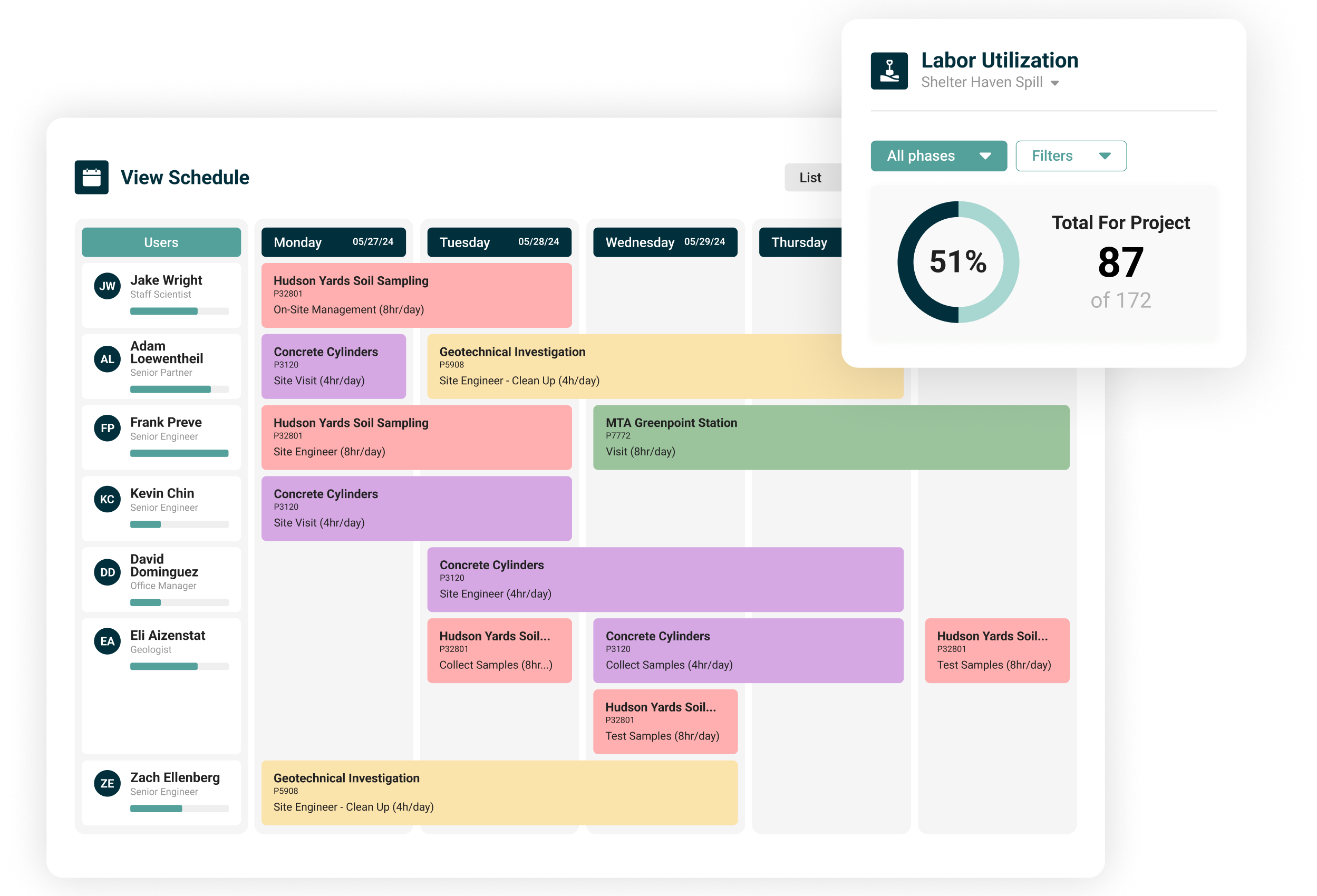
Dispatch Built for CMT: Aldoa includes drag-and-drop scheduling, staging queues, and technician visibility. Managers control assignments and reduce coordination overhead.
Structured Field Data Collection: Configurable digital forms enforce required fields and automate calculations. This prevents incomplete submissions and reduces rework.
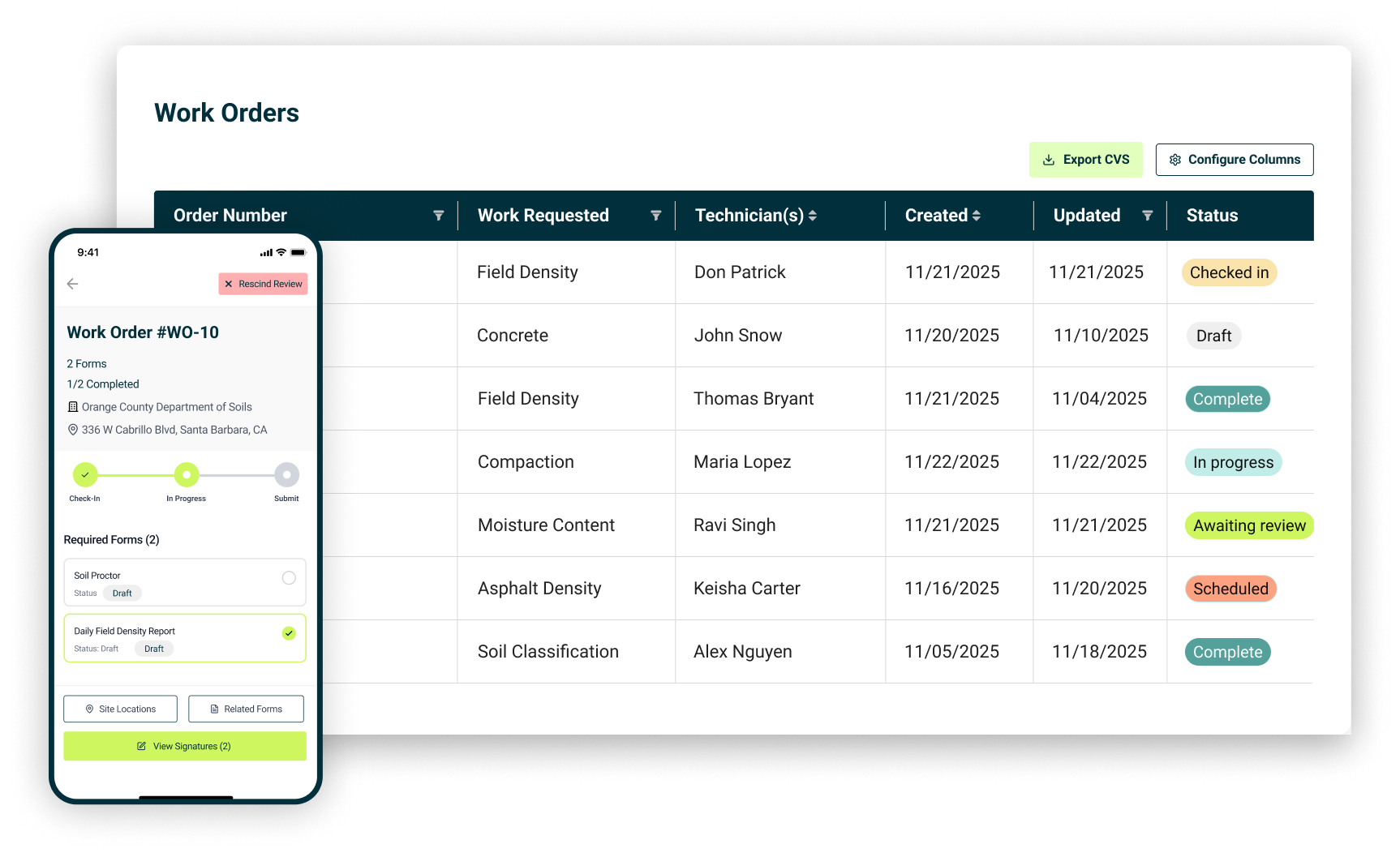
Real-Time Workflow Tracking: Managers can see when technicians check in, submit forms, and move projects through review and closeout in real time.
Integrated Lab Operations: Cylinder break scheduling, results entry, and reporting live in a centralized dashboard. Integration with testing equipment reduces manual data entry.
Centralized Review & Approvals: Reports move through a structured review workflow with commenting, routing, and digital sign and seal, all in one system.
Why Aldoa Stands Out
Most construction materials testing software tools focus on one part of the workflow.
Aldoa connects:
- Dispatch
- Field inspections
- Lab testing
- Reporting
- Approvals
This eliminates fragmentation and gives teams full visibility into every project.
Traditional ASTM Workflow vs Modern CMT Software
In a traditional ASTM or AASHTO driven workflow, data passes through multiple hands and systems before it becomes a final report. A technician fills out a form in Excel. Results are emailed. A project manager edits a template. Someone manually inserts photos. A reviewer signs and seals a PDF.
Every handoff introduces delay and risk.
Modern CMT software eliminates those handoffs by connecting dispatch, field data collection, lab results, review, and reporting inside one platform. The workflow becomes continuous instead of fragmented.
That shift is what separates legacy materials testing software from modern systems built specifically for construction materials testing firms.
What the Best Construction Materials Testing Software Must Deliver
The best CMT software in 2026 does more than digitize forms. It must unify operations.
A modern materials testing software platform should support dispatch and technician scheduling built specifically for inspection workflows. It should prevent incomplete field submissions through required fields and structured forms. It should provide real-time workflow visibility so managers can see exactly where every project stands.
It must also support lab operations, automate reporting, centralize review and approvals, and simplify consolidated client closeouts.
Many tools handle one piece of this process. Very few platforms handle the entire lifecycle of a construction materials testing project inside a single environment.
Dispatch Built for Construction Materials Testing Workflows
Generic calendars are not dispatch systems.
Construction materials testing requires multi-site coordination, technician utilization visibility, staged work orders, and controlled publishing so technicians only see assigned tasks.
Aldoa includes staging queues, drag-and-drop dispatch, multi-day scheduling views, and real-time labor utilization tracking. Managers control what technicians see, reducing confusion and unnecessary communication.
For many firms, replacing Google Calendar with CMT-specific dispatch software is the first major operational improvement.
Field Check-In and Real-Time Workflow Tracking
In many firms, managers do not know when a technician is onsite until a client calls.
Modern CMT software changes that.
With Aldoa, technicians check in to access assigned forms. That action triggers live workflow tracking. Managers can see when work begins, when forms are submitted, when reports enter review, and when projects are closed out.
This type of operational visibility simply does not exist in spreadsheet-based materials testing software environments.
Forms That Prevent Missing Data and Reduce Rework
Incomplete field forms are one of the largest drivers of backlog in construction materials testing firms.
Aldoa’s configurable digital forms are built around your standard operating procedures. Required fields prevent submission if critical information is missing. Embedded equations automate calculations. Structured sample sets reduce manual formatting.
Instead of chasing corrections after submission, project managers receive complete, structured data the first time.
Modern CMT software must enforce data integrity at the point of entry. That is how turnaround times improve.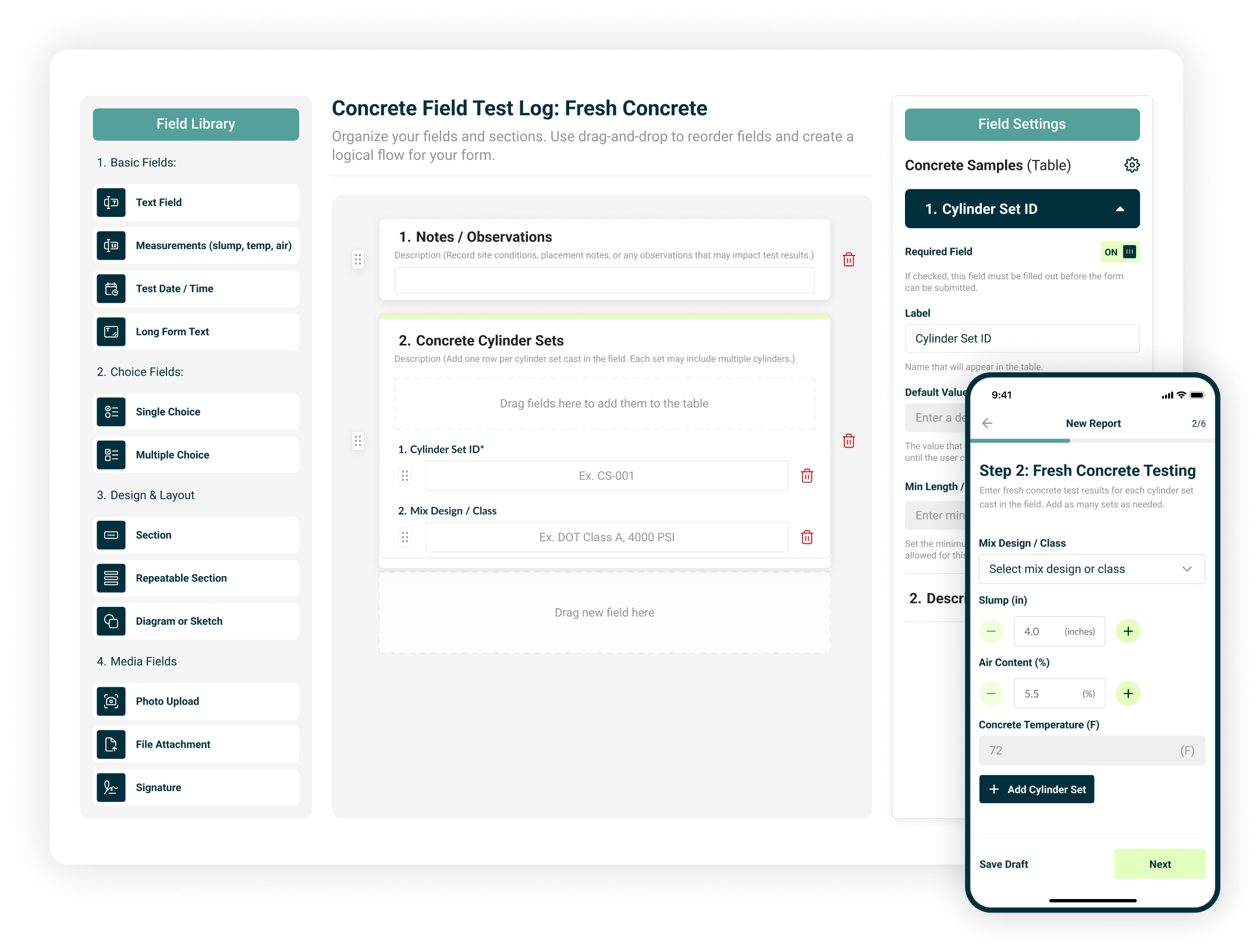
Evidence-Rich Documentation with Maps and Photos
Field documentation should not live in email threads or personal devices.
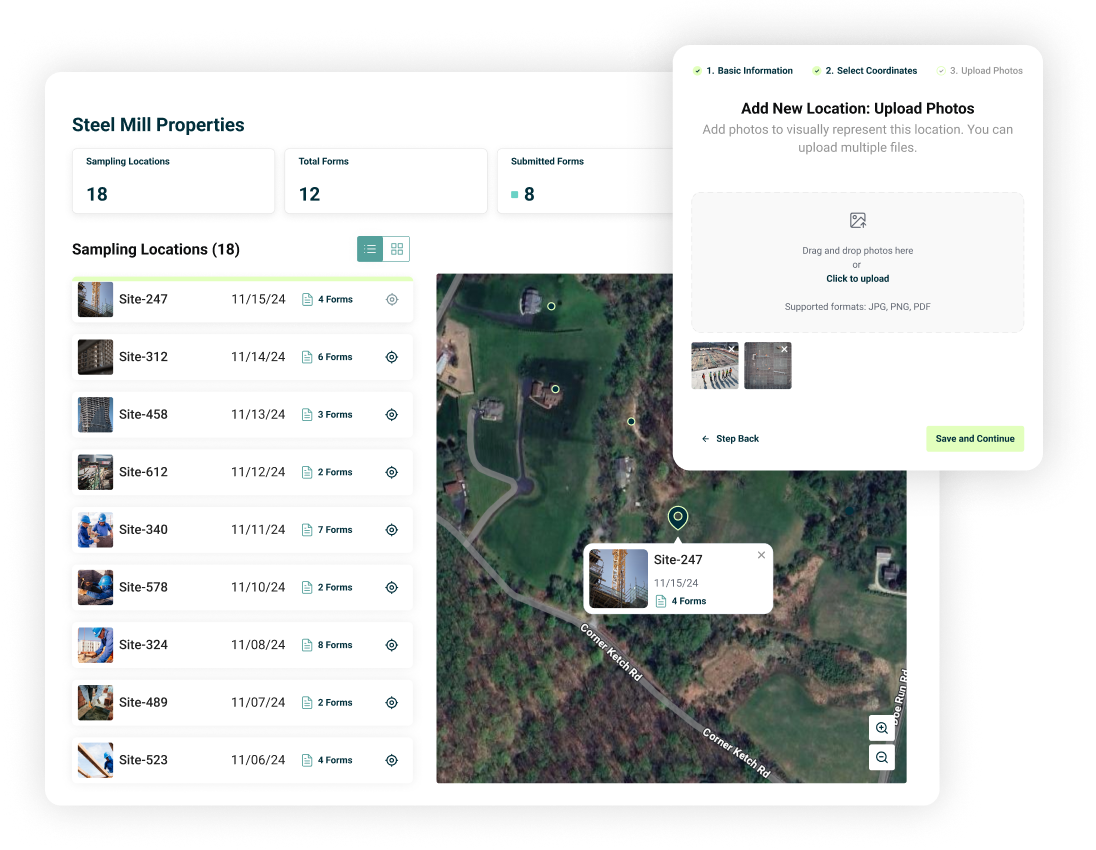
Construction materials testing software should embed geolocation tagging, photo capture, layered site plans, and map-based documentation directly into the workflow.
When maps, photos, and testing data are tied to a single work order, documentation quality improves and audit readiness increases. Everything is traceable and centralized.
Streamlined Lab Operations and Equipment Integration
Materials testing software must support lab workflows as effectively as field inspections.
Cylinder break schedules, results entry, and strength reporting should live inside a structured dashboard rather than in disconnected spreadsheets.
For firms using Forney equipment, Aldoa supports integration that automatically ingests results when connected to Wi-Fi. This reduces manual transcription errors and speeds up report generation.
Lab efficiency is a core component of modern CMT software, not an afterthought.
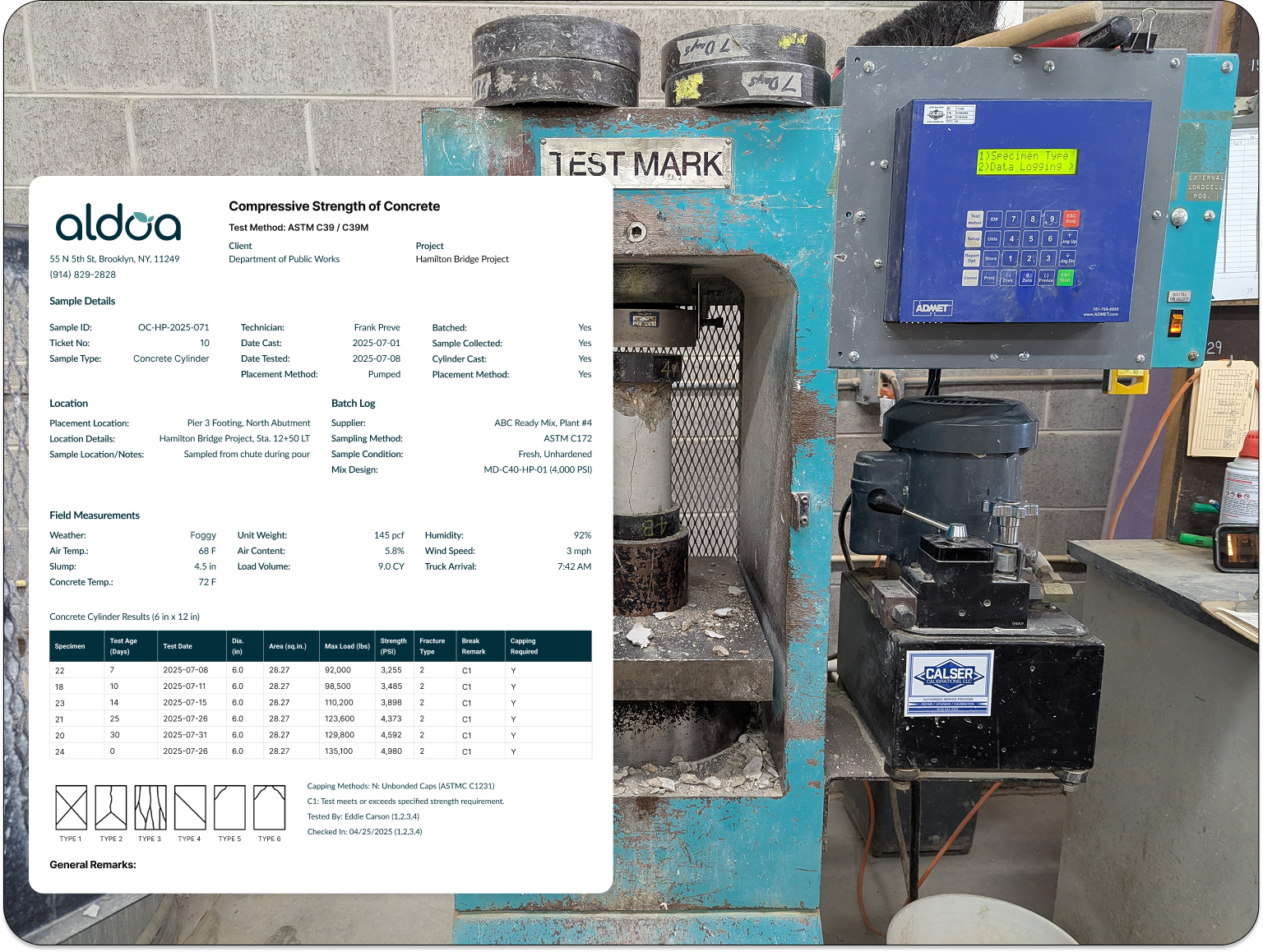
Centralized Review, Approvals, and Digital Sign and Seal
Review bottlenecks are one of the most common operational slowdowns in CMT firms.
Aldoa provides a centralized review inbox where reports are routed according to organizational hierarchy. Reviewers can approve, edit, comment, send back, rescind, and digitally sign within the same platform.
The same structured workflow applies to timecard approvals. No more buried email threads. No more lost PDFs.
Construction materials testing software should make review measurable and transparent.
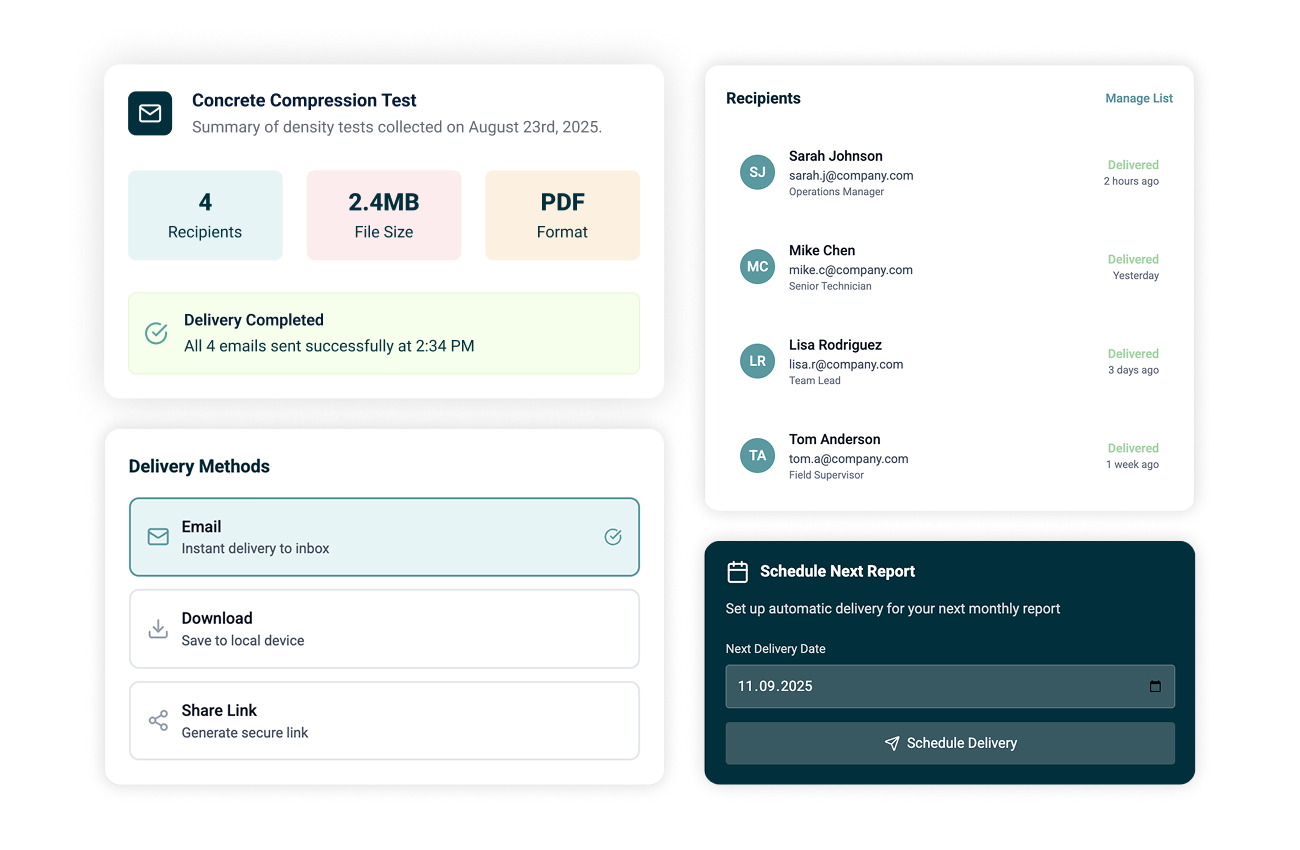
From Dispatch to Deliverable: A Unified Workflow
In a modern CMT software environment, the lifecycle of a project is continuous.
A work order is created and dispatched. A technician checks in onsite and completes structured digital forms. Photos and geolocation data are attached automatically. The submission enters a centralized review queue. The report is approved, digitally signed, and instantly available for client access or consolidated dashboards.
There are no shared drive scavenger hunts. No manual bundling. No redundant data entry.
That is what true workflow unification looks like in construction materials testing software.
👉 Schedule a demo to see how Aldoa can streamline your CMT operations.
Implementation, Pricing, and Support
Replacing legacy systems can feel risky. Implementation and pricing structure matter.
Aldoa provides:
- Guided implementation (typically ~4-12 weeks)
- User Acceptance Testing phase
- Ongoing configuration support
- No setup fees
- Transparent subscription pricing
- No hidden feature add-ons
- Ongoing support included
Many alternatives require significant upfront costs and complex onboarding.
Why CMT Firms Are Modernizing in 2026
Legacy systems are becoming harder to maintain. Spreadsheet-based workflows create bottlenecks. Administrative overhead increases faster than revenue.
CMT firms are adopting modern software to:
- Reduce manual data entry
- Improve turnaround time
- Standardize reporting
- Increase operational visibility
- Scale without adding administrative overhead
Why Aldoa Is the Leading Construction Materials Testing Software in 2026
Aldoa is purpose-built for construction materials testing and geotechnical engineering firms. It connects field inspections, lab testing, reporting, and approvals inside one unified platform.
Firms using Aldoa report faster turnaround times, fewer compliance errors, and improved client satisfaction due to standardized, consistent reporting workflows.
Unlike generic materials testing software, Aldoa is designed specifically for the operational realities of CMT firms.
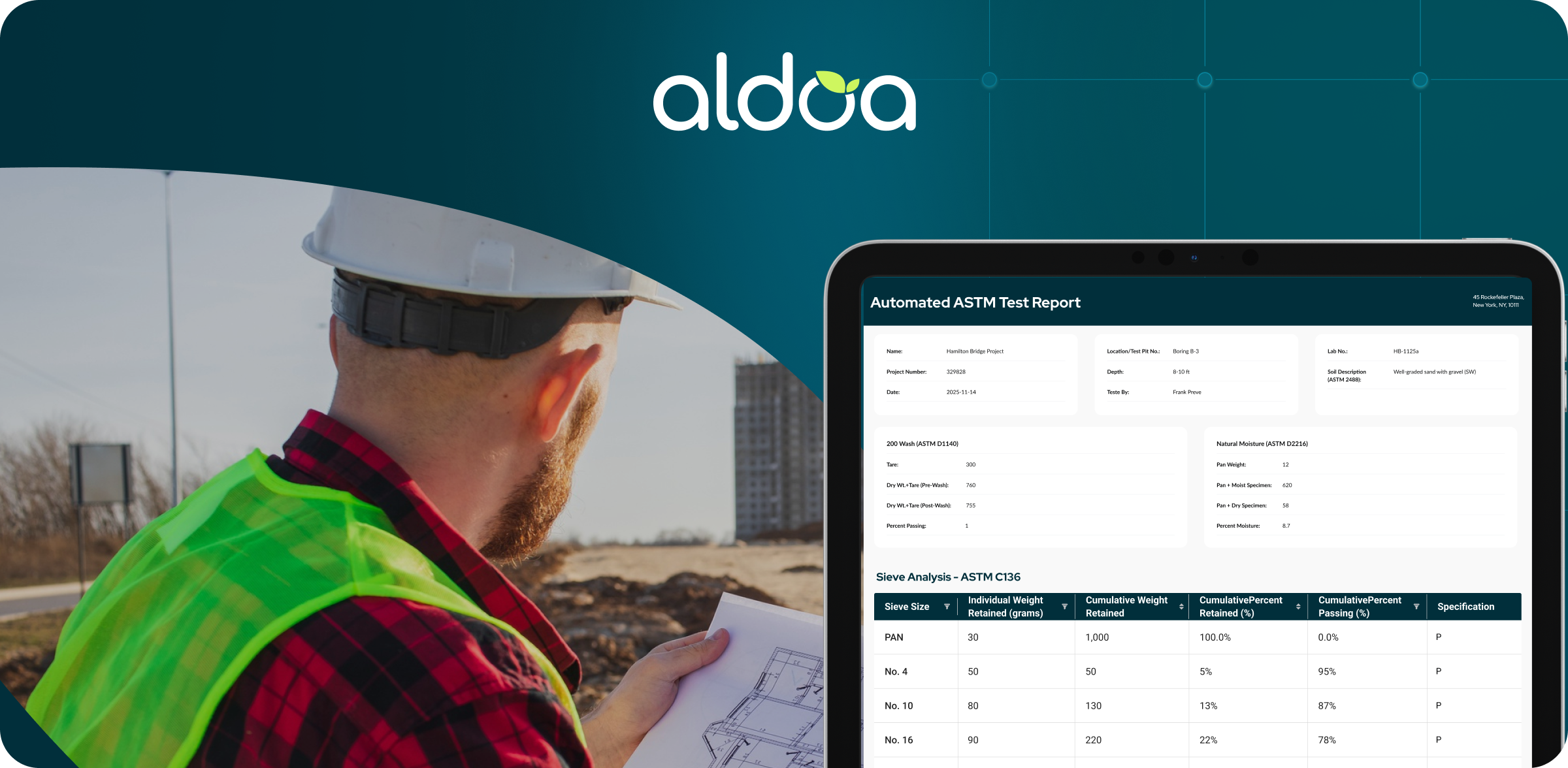
Aldoa Key Advantages
- Industry-Specific Design: Built exclusively for geotechnical and CMT operations.
- Compliance Automation: Embedded ASTM/AASHTO forms and checks.
- Real-Time Collaboration: Cloud access for field and lab teams.
- Custom Reporting: Generate client, DOT, and contractor reports instantly.
- ForneyVault Integration: Automatically import test results directly from equipment.
Proven Impact
Labs using Aldoa report:
- Up to 60% faster report turnaround.
- Fewer compliance errors and rejected submittals.
- Higher client satisfaction due to faster, standardized results.
The Bottom Line
The best construction materials testing software in 2026 is not just a reporting tool.
It is a single source of truth connecting dispatch, field inspections, lab testing, approvals, and client deliverables.
If your firm is evaluating CMT software or searching for a replacement for spreadsheets, Access databases, or legacy systems, now is the time to consolidate your workflow.
Modern materials testing software should eliminate fragmentation, improve data quality, and provide real-time operational visibility.
Schedule a demo to see how Aldoa streamlines construction materials testing operations from dispatch to closeout.
👉 Schedule a demo to see how Aldoa can streamline your CMT operations from dispatch to closeout.
Frequently Asked Questions About Construction Materials Testing Software
.svg "Aldoa Assets (3)")